Who We Are, What We Do
The Greater Delaware Valley Professional
Fire Fighters'
Association Trust
Our
Mission is to Advance the Interests of Organized Fire Fighters
in the Greater Delaware Valley: By Promoting Better
Working Conditions (including wages and benefits) for Professional
Fire Fighters; Organizing the Unorganized; Promoting Safety in the
Workplace; Educating Members in all of the Aforesaid Areas; and
Assisting the Participating Local Unions by Providing Education to
Enable Such Unions to Better Represent their Members
on Employment Issues.
FIREHOUSE.COM - The International Association of Fire Fighters has filed a lawsuit to remove “cancer-causing” PFAS chemicals from firefighter protective gear.
The labor union recemtly sued the National Fire Protection Association in Dedham’s Norfolk County Superior Court, citing NFPA’s role in imposing a testing standard that effectively requires the use of PFAS in gear.
PFAS, toxic per- and poly-fluoroalkyl substances, are found in firefighter bunker gear and have been linked to cancer, the leading cause of firefighter death. Nearly 75% of those honored at the 2022 Fallen Fire Fighter Memorial died of occupational cancer.
“The very gear designed to protect firefighters, to keep us safe, is killing us,” said General President Edward Kelly, adding that the testing standard from NFPA “needlessly requires the use of PFAS in firefighter gear.”
“It’s about removing the cancer-causing chemicals in our gear and finding justice for our brother and sister members,” Kelly said about the lawsuit that seeks damages and other relief.
NFPA’s Standard 1971 establishes minimum levels of protection from thermal, physical, environmental, and biological hazards faced during firefighting.
The standard calls for using PFAS in the middle moisture barrier of firefighter bunker gear to satisfy the NFPA’s Ultraviolet Light Degradation Test — which requires turnout gear to be exposed to UV light for 40 hours without degradation. The only substance that can pass the test for that long is PFAS.
The lawsuit seeks to hold the NFPA liable for not removing the dangerous test from its Standard on Protective Ensembles for Structural Fire Fighting and Proximity Fire Fighting.
PFAS 'forever chemicals' are everywhere – including fire fighter turnout gear. The chemicals, linked to cancer and other diseases, pose an occupational threat, and our panelists – Jeff Knobbe of the Alameda County Fire Department; Dr. Jamie DeWitt, a professor of pharmacology and toxicology at Eastern Carolina University; Dr. Graham Peaslee, a University of Notre Dame professor, and Dr. Dan Whu, chief medical officer of the IAFF – answers your top questions about PFAS in the fire service. Neil McMillan, IAFF's director of science and research, facilitates the discussion.
Occupational cancer is the leading cause of death among firefighters.
“CBS Mornings” co-host Tony Dokoupil took a deeper look at the firefighters nationwide who claim chemicals in their protective gear are making them sick.
“The International Association of Fire Fighters (IAFF) supports the latest legal challenges filed by fire fighters in Massachusetts and New York alleging that the per- and polyfluoroalkyl substances – so called ‘forever chemicals’ also known as PFAS — in fire fighters’ personal protective equipment (PPE) caused their illnesses, and that the corporations who sell the products are engaged in a ‘continuous and ongoing public deception’ regarding their risks.
“What we have known for a while and what the public is starting to learn is that there is also another hazard lurking that threatens the health and well-being of fire fighters in every firehouse in the United States and every fire hall in Canada. The protective turnout gear that fire fighters wear contains PFAS, which are used to increase water resistance and are in the moisture barrier and on the outer shell of fire fighters’ protective gear. PFAS have also been identified as ‘possibly carcinogenic’ to humans by the International Agency for Research on Cancer (IARC). The correlation between fire fighters and elevated cases of cancer is not by coincidence.
“It is the position of the IAFF, representing more than 326,000 professional fire fighters, paramedics and emergency medical dispatchers across the United States and Canada, that PFAS play a direct role in contributing to the increased incidence of cancer among fire fighters.
Description: This recall involves Kidde TruSense Smoke Alarms and Combination Smoke/Carbon Monoxide Alarms. The recalled units are Kidde Model Series 2040, 2050, 2060 and 2070 Smoke and Combination Smoke/Carbon Monoxide alarms. Only alarms with the TruSense logo or “AMBER=FAULT” printed on the front of the alarm are included in this recall. The model number is printed on the back of the alarm.
Model
Alarm Type
2040-DSR
Smoke
2050-DS10
Smoke
2060-ASR
Smoke
2070-VDSCR
Combination Smoke/Carbon Monoxide
2070-VASCR
Combination Smoke/Carbon Monoxide
2070-VDSR
Smoke
2070-VASR
Smoke
Remedy: Consumers should immediately contact Kidde for a free replacement alarm. Consumers should keep using the recalled alarms until they install replacement alarms.
Incidents/Injuries: No incidents or injuries have been reported.
Sold At: Walmart, Home Depot, Menards and other department, home and hardware stores and electrical distributors nationwide, and online at Amazon.com, ShopKidde.com and other online retailers from May 2019 through September 2020 for between $10 and $70.
Importer(s): Walter Kidde Portable Equipment Company Inc., of Mebane, N.C.
The National Fallen Firefighters Foundation (NFFF), a national non-profit organization headquartered in Emmitsburg, MD, is sending out a warning to consumers regarding new charity and impostor scams.
Several individuals have reported being solicited by telephone for donations to support the National Fallen Firefighters Foundation or an organization with a similar name. The Foundation reminds individuals that the National Fallen Firefighters Foundation does not now, and never has, solicited individual donations over the phone. If you have been contacted via telephone and were asked to make donations to the National Fallen Firefighters Foundation, this is a scam.
It’s not the flames or even the smoke. It’s the toxins that escape during a fire that are causing high cancer rates among the nation’s firefighters.
In the new film “Only the Brave,” 19 members of the elite Granite Mountain Hotshots, a skilled team of firefighters from Arizona, die when a bolt of lightning ignites a fire and entraps the men.
The real-life deaths of these men, who’ve been called the Navy SEALs of firefighting, is how many people still think most firefighters die.
But a surplus of new evidence shows that it’s not just the flames themselves or the inhalation of smoke that’s taking our firefighters in historically large numbers.
In fact, neither heart disease nor lung disease is the number one killer of firefighters in 2017.
It’s cancer.
And it’s largely because fires have gotten far more toxic in the past 25 years.
According to the National Fire Protection Association, 15,970 home fires a year involve clothes dryers or washing machines. Ninety two percent of those fires were due to the dryer.
From 2010-2014, those fires resulted in 13 deaths, 440 injuries and $238 million in direct property damage.
“The leading items first ignited in dryer fires were dust, fiber or lint (26% of total) and clothing (26%), while items first ignited in washing machine fires were part of the appliance itself, including wire or cable insulation (26%), appliance housing or casing (24%), and drive belt (11%),” a report by NFPA states.
Here are some tips from NFPA:
Have your dryer installed and serviced by a professional.
Do not use the dryer without a lint filter.
Make sure you clean the lint filter before or after each load of laundry. Remove lint that has collected around the drum.
Rigid or flexible metal venting material should be used to sustain proper air flow and drying time.
Make sure the air exhaust vent pipe is not restricted and the outdoor vent flap will open when the dryer is operating. Once a year, or more often if you notice that it is taking longer than normal for your clothes to dry, clean lint out of the vent pipe or have a dryer lint removal service do it for you.
Keep dryers in good working order. Gas dryers should be inspected by a qualified professional to make sure that the gas line and connection are intact and free of leaks.
Make sure the right plug and outlet are used and that the machine is connected properly.
Follow the manufacturer’s operating instructions and don’t overload your dryer.
Turn the dryer off if you leave home or when you go to bed.
The U.S Fire Administration reports,” more home clothes dryer fires occur in the fall and winter months, peaking in January.”
Each year, the number of men and women in the fire service taking their own lives continues to rise, according to the Firefighter Behavioral Health Alliance.
84 percent of firefighters have experienced a traumatic event while on the job.
In 2017, 103 firefighters committed suicide nationally, where only 93 were killed in the line of duty.
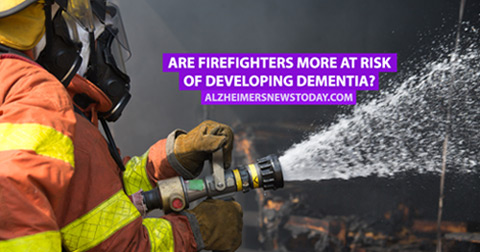
Over the years, researchers have focused on the connection between firefighting and various diseases, including cancer and heart disease, but could firefighters also be more at risk of developingdementia and Alzheimer’s disease?
According to an article on firechief.com, although there has yet to be any official studies into the link between firefighting and dementia, a 2015 article highlights the risks of exposure to certain toxins and their link to dementia. These toxins are familiar to most firefighters and they will have undoubtedly come into contact with them at some point in their careers.
Developed by the IAFF in partnership with the U.S. Fire Administration (USFA) and supported by the U.S. Department of Homeland Security (DHS) Science and Technology Directorate, First Responders Group, Office for Interoperability and Compatibility, this second edition provides the fundamental awareness of radio communications technology and human resource issues, and covers basic radio technology, digital and analog technology, conventional and trunked radio systems, portable radios, system design and implementation, interoperability and spectrum licensing.
First Responder Guide to Burn Injury Assessment and Treatment
The International Association of Fire Fighters Charitable Foundation Burn Fund has partnered with the American Burn Association to develop this manual to provide first responders (Fire Fighters and emergency medical providers) with the basic training and knowledge necessary to effectively assist those who have suffered a burn injury or cold exposure,
This manual provides a comprehensive, general overview of burn and trauma injuries. It takes readers through each step of a response, providing them with simple explanations and classifications of injuries, depictions of the physiological effect these injuries have on the body, initial injury assessment and on-scene management guidelines, as well as basic treatments
to administer during the first minutes of a response.
The ultimate goal of this project is to help ensure that all first responders are more fully capable of assessing and managing a burn injury. When first responders are prepared, those who have sustained a burn injury are provided with the best possible treatment, and the chances for patient
survival and recovery are greatly increased.
Production of this manual was funded through a Fire Prevention and Safety Grant awarded through the Assistance to Firefighters Grant Program. Special thanks are given to the Office of Grants and Training at the U.S Department of Homeland Security. To receive your copy/copies free of charge email Tom Flamm at tflamm@iaff.org or call 202-824-8620.
IAFF Calls Out Looters Of Public Pensions
Across America, state budgets are being balanced on the backs of current and former public employees by breaking commitments to fund their defined-benefit retirement plans. Former Gov. Chris Christie (R-NJ) is the latest to go this route, recently warning his state’s fire fighters, police officers, teachers and other public employees that he’ll propose skipping a couple (more) yearly installments against the state’s pension liability due to an unexpected revenue shortfall.





 The National Fallen Firefighters Foundation (NFFF), a national non-profit organization headquartered in Emmitsburg, MD, is sending out a warning to consumers regarding new charity and impostor scams.
 WHAT DO THE GUIDELINES SAY ABOUT CLEANING FIREFIGHTER BOOTS?